A shared way to say what good looks like
Picture tour: page 1 of 3
Two teams can agree on a rule and still write it in different ways. One may say “outside wall.” Another may say “external wall.” Their tools may store the same fact under different names.
Axioval gives them one shared description to pass around.
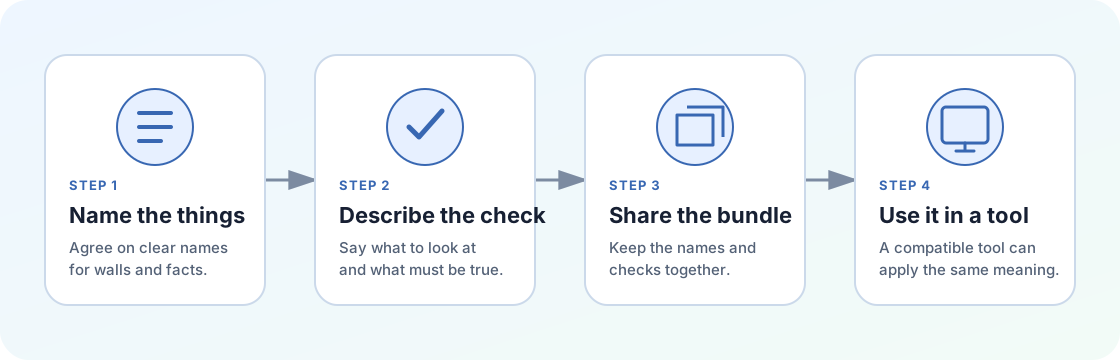
Start with a sentence
A good check begins as a sentence that a person can review:
Every object marked as cost group 331 must be a wall, must carry loads, and must be external.
That sentence answers two questions:
- What should we look at? Objects marked 331.
- What should be true? Each object is a wall, load bearing, and external.
Agree on the words
The words “wall,” “load bearing,” and “external” need shared meaning. Axioval lets a team name each idea once and connect it to the names used by its building tools.
This avoids copying the same explanation into every check.
Keep the questions separate
The example uses three small checks instead of one large check. This matters because each failure tells a clear story:
- The object is not a wall
- Load bearing is not true
- External is not true
A report can point to the exact fact that needs attention.
Share the description
The shared names and checks travel together in a bundle. A tool can read the bundle only when it understands the kinds of checks inside it.
Axioval does not decide how a tool opens a building model or draws a result. It keeps the description clear while each tool does the work it knows how to do.
You have the main idea
Name things clearly, describe each check in small parts, and share the complete description.